
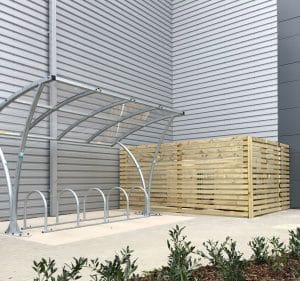
Procter Contracts manufactures and installs high-quality bespoke cycle shelters, racks, lockers, hoops and chicanes
Procter Contracts can manufacture and install almost any bespoke cycle shelters, racks, lockers, hoops or chicanes to architects’ drawings, or can create designs based on a sketch if that is all the client has available. The company has seen substantial growth in this side of its business, partly due to the increasing use of bicycles and partly due to its reputation for quality work and outstanding customer service. Procter’s cycle shelters, racks and chicanes are used by local authorities, supermarkets and other retail outlets, schools and colleges, businesses, hospitals, leisure complexes, public transport operators and housing associations.
Depending on the application, clients might need cycle sheds, shelters, compounds, lockers or racks, and the aesthetic must be appropriate for the environment and budget. Procter Street Furniture works in galvanised steel, powder-coated galvanised steel, stainless steel and timber to meet the design requirements. Shatter-proof clear polycarbonate can be used for walling and roofing, profiled steel sheet can be employed for larger roofs, and vandal-resistant fasteners are specified if these are deemed to be necessary.
Customers procuring cycle shelters or racks often also require chicanes to either slow cyclists or ensure they dismount in areas where pedestrians are present. Procter Street Furniture can either supply and install simple hoops or bollards, or manufacture bespoke chicanes if there is a need for something with more aesthetic appeal.
Any level of service can be provided, including site surveys, design, manufacture and installation; at the other extreme, the company can manufacture to architects’ drawings and deliver the finished products to site ready for installation by a main contractor. All projects are overseen by a senior project manager who ensures the customer’s requirements are met at every stage. Where there is also a need at the same site for fencing, railings, barriers or gates (including automatic powered gates), Procter Contracts can take overall responsibility, drawing together resources from three different divisions of Procter Bros Ltd – namely Procter Street Furniture, Procter Fencing Systems and Procter Automatic Gates – to provide the customer with a single source for all of these products and installation services, and a single senior point of contact.
Follow the link to find out more about high-quality bespoke cycle shelters, racks and chicanes from Procter Street Furniture or contact us to discuss specific projects by means of the Live Chat facility on the website, email [email protected] or call the telephone number shown on this page.
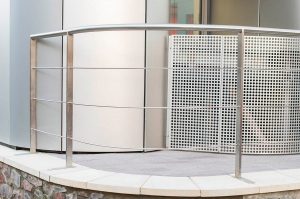 Procter Contracts is now supplying bespoke stainless steel handrails that benefit from exceptional corrosion resistance thanks to the use of electropolishing that ensures the handrails continue to look good for far longer than handrails that have not received this treatment.
Suitable for use indoors and outdoors, stainless steel handrails have a clean, contemporary, high-quality appearance and, most importantly, they need virtually no maintenance in order to maintain their appearance over many years. Sometimes architects shy away from specifying stainless steel handrails for exterior applications, particularly in marine environments, because they are afraid that ‘tea-staining’ and minor surface corrosion will detract from the good appearance. However, Procter’s handrails benefit from passivation or, more usually for exterior projects, electropolishing to ensure the handrails will remain entirely corrosion-free.
Passivation involves a relatively simple chemical process that is used after manufacturing processes such as welding or grinding. Carried out in accordance with the requirements laid down in ASTM A967, Standard Specification for Chemical Passivation Treatments for Stainless Steel Parts, the process restores the protective oxide layer to the stainless steel surface without adversely altering the appearance. Passivating is highly effective for indoor applications but is not as effective outdoors.
For corrosion protection that is up to 30 times better than that available from other processes, electropolishing removes a very small amount of surface material by means of electrolysis, with the process undertaken in line with the requirements in ISO 15730, Metallic and other inorganic coatings – Electropolishing as a means of smoothing and passivating stainless steel. Electropolished handrails are typically specified for outdoor applications and are highly recommended for use in marine environments where salt spray would quickly overcome the protection provided by passivation. Although electropolishing makes the stainless steel appear somewhat brighter, this can be controlled by managing the process parameters without impacting on the metallurgical benefits. Procter Fencing Systems is so confident that its electropolished stainless steel handrails will remain rust-free that it offers a three-year anti-corrosion warranty.
The finishing process is a major influence on the corrosion-resistance of the handrail, but so is the grade of stainless steel. While 304 and 316 grades are suitable for interior applications, only 316 grade is recommended for external applications due to this alloy’s molybdenum content that gives superior resistance to chemical attack and oxidation. Handrails made of 304 and 316 grades will look identical; if customers want a variation in the appearance, they can specify either a satin polished (320 grit) finish or mirror polished finish.
To complement the corrosion-resistant stainless steel handrails – and to ensure that corrosion does not take hold elsewhere – all fittings and fasteners are manufactured from either 304 or 316-grade stainless steel. Vandal-resistance fasteners can be specified and, if necessary, features can be incorporated within the design to cater for mounting points on floors and walls that are not perfectly aligned or flat.
Architects can have a free hand in designing stainless steel handrails, though it should be noted that stainless steel tubing is only available commercially in the following diameters: 12, 25, 32, 42, 50, 60 and 76mm, with 42, 48 and 50mm being the most popular for handrails. Wall thicknesses are 2.0, 2.3, 2.6 or 3.0mm. Alternatively, handrails can be manufactured from the bar rather than the tube, which a further range of standard sizes from which to choose. Stainless steel stanchions can be fabricated to almost design imaginable.
Where handrails are to double as balustrading, various infills can be used including perforated stainless steel sheet, glass or stainless steel bars. Architects can discuss their requirements with one of Procter’s experts to ensure that the final design is cost-effective and maintenance-free (or very low-maintenance). Depending on the project, handrails can incorporate sharp bends, sweeping curves and complex curves – such as for handrails on spiral staircases.
In addition to stainless steel passivated and electropolished handrails, Procter Contracts can also supply complementary bespoke stainless steel products ranging from gates and barriers to cycle stands and seating.
For stainless steel handrails – and complementary stainless steel products – Procter Fencing Systems provides whatever level of service is appropriate to the project. If architects already have drawings available then these can be used to manufacture products that are delivered to site ready for a contractor to install. However, if a more comprehensive service is required, Procter can conduct a site survey, consult with the client and provide a detailed proposal, then undertake the design, manufacture and installation. Delivery times depend on various factors including the complexity of the design, but typically handrails can be manufactured and delivered within four weeks.
Thanks to the use of electropolishing, the corrosion-resistant stainless steel handrails from Procter Fencing Systems offer a major benefit over competitive products from other suppliers. To ensure the quality is never compromised, stainless steel components are processed using dedicated equipment to avoid cross-contamination with other grades of steel, and care is taken to ensure that the stainless steel components never come into contact with other steels. All welding is performed using the TIG (tungsten inert gas) process to give a high-quality weld that requires minimal finishing; thermal oxides that form around the weld’s heat-affected zone are removed by dissolution prior to passivation or electropolishing. Testing with copper sulphate solution detects any free iron on the surface of the finished product, and this test is more practical than the standard 96-hour salt spray test conducted in a sample cabinet. Prior to dispatch, all stainless steel components are covered with sleeving or bubble wrap to protect them during transport and site handling.
 Stainless steel handrails from Procter Fencing Systems are very competitively priced. Moreover, if customers specify the electropolished finish, the stain resistance is far superior and the handrails are entirely maintenance-free. Almost any design can be fabricated and, if required, Procter offers a complete turnkey service from site survey to installation.
Follow the link to find out more about stainless steel handrails and complementary products or contact us to discuss specific projects.
 Jeremy Procter, Managing Director of Procter Fencing Systems, outlines ten ways to keep control of fencing costs. This will help an organisation to cope with these recessionary times when budgets are tight yet acquisitive crime is on the rise.
In recessionary times it is necessary to be careful with budgets, yet there is also rising acquisitive crime. For companies wanting to install fencing, either for security or other reasons, the time is ripe to consider how to keep control of costs for fencing and related security measures. Here are ten things to consider when specifying fencing, all of which will help to reduce costs considerably but without compromising security.
1. Why do you need a fence?
This might seem an obvious question to ask, but fences can be used for simple boundary demarcation or to improve security or aesthetics. In many cases the requirement is for a combination of these. But if you do not consider this question, you could end up paying for something you do not need. For example, a retailer wanting to prevent the theft of vehicles or trolleys could consider hoop barriers or knee rails; both of these are simple and effective for the intended purpose, yet neither creates an obvious visual barrier or costs as much as some types of fencing.
2. Risk assessment of fences or barriers
Having identified the need for a fence or barrier, the next step is to undertake a basic risk assessment. This should identify the specific threats against which you are seeking to provide protection. For example, do the threats relate to terrorism, arson, theft or vandalism?
3. Match the fencing solution to the problem
The risk assessment will quantify the risks and enable you to identify the best type of fencing for your needs. Do not simply look to see what your neighbours have installed, as they might have different needs from you or they may have installed the wrong type of fencing!
4. Fine-tune the fencing
It is a mistake to assume that the risk throughout your site is uniform and you need to install the same type of fencing everywhere. There may be some areas that do not need any fencing at all and others for which a lower-specification, less expensive type of fencing will be sufficient. If there are a small number of particularly vulnerable areas, it may be that additional security measures here could enable lower-specification fencing to be installed elsewhere, leading to an overall cost saving.
5. How high a fence should be?
Having decided on the type(s) of fencing required, you need to specify the height(s). This is important because higher fences make it more difficult to climb or pass stolen goods over. And theft is not just something for retail outlets to consider; regrettably, theft by employees at other business premises can be a problem (this risk should be quantified in the risk assessment – see above).
6. Do not judge a fence by its appearance
It is important to understand that different types of fencing can be more secure than others, and appearances can be deceptive. For example, palisade fencing has a high visual impact and is very effective for the right purposes (eg deterring vandals) but it is poor at deterring or delaying thieves.
7. Controlling access
Access points will be required and you should remember that the best fence is only as secure as its gate(s). The number of access points should, therefore, be minimised and the security of the gate(s) and the access controls need to be adequate. If the gates cannot be secured then the fencing will not perform well as a deterrent.
8. Fencing Installation
Always contact a number of professional installation companies. Check their backgrounds and find out whether their workers are properly trained (all of the installers employed by Procter Fencing Systems are CSCS accredited). Furthermore, do the installation companies work to recognised quality standards, such as BS EN ISO 9001:2008 and BS 1722, the standard that covers most fencing products?
9. Compare like-for-like in fencing
When comparing quotes for fencing make sure that the products are the same; for example, it is easy to substitute a lighter wire or pale, but this will have an effect on the performance and longevity of the fence.
10. Consider the cost of fencing
If the cost of the fencing seems prohibitive, look back at the risk assessment and the risks that you quantified. If you were to delay installing the fencing, consider the costs associated with those risks, such as a major theft, vandalism or arson. Fencing is a very cost-effective form of insurance and one where savings can be made (in the right places) without reducing the level of protection.
Contact Procter Fencing Systems for more information about perimeter fencing by emailing [email protected]
|
|
Procter Contracts, one of the UK’s leading specialist manufacturers of fencing and gates, has published a specifier’s guide to perimeter security fencing for schools, which is available free of charge upon request. This comprehensive publication, called ‘Fencing for Schools’, is an invaluable aid to specifiers who need to know the pros and cons of alternative types of fencing for schools.
Research has shown that fencing is the most important of the available security measures for protecting schools. However, there is a fine balance to be struck between providing adequate security and maintaining an attractive learning environment. Furthermore, fencing has to be considered alongside other security measures, as the optimum choice of fencing will, to some extent, depend on other measures employed. Other factors to consider when specifying fencing include local planning requirements, national and international standards, and costs.
Specifiers often do not appreciate how complex the subject of perimeter security is today. Furthermore, individual projects have their own needs so must be considered on a case-by-case basis.
‘Fencing for Schools’ explains and illustrates the various options available, presents the advantages and limitations of each, and helps the reader to make the right decision that will give the necessary level of security at an acceptable cost and without compromising other areas such as aesthetics.
The guide includes useful sections on risk assessments, types of fencing, gates, fence posts, installation and additional security features, plus there is a table of British, European and international standards relating to security fencing.
Click to download a free PDF copy of Fencing for Schools , the specifier’s guide to perimeter security fencing for schools. Alternatively, to discuss any requirements for fencing, gates or access control systems, please email Procter Fencing Systems.
 The DHF guide to gate safety has been published by the Door and Hardware Federation (DHF), a UK trade association for manufacturers and installers. This booklet, entitled Guide to Gate Safety Legislation and Standards, will help manufacturers, installers and owners/operators to ensure the safety of new and existing powered sliding gates and swing gates. It has been published in the wake of the deaths of three children caused by unsafe automated gates, and the two safety notices issued by the Health & Safety Executive (HSE). Moreover, the HSE was consulted in the production of this new publication and endorses the sensible advice to installers on managing the risks from powered gates set out in the guidance.
In the introduction, the DHF guide to gate safety explains the background and how powered and automated gates are considered to be ‘machinery’ within the scope of the European Machinery Directive 2006/42/EC and the UK’s corresponding Supply of Machinery (Safety) Regulations 2008. The gate safety guide also highlights the importance of risk assessment and identifies the most important powered sliding gate standards. However, the current standards do not cover adequately all risks, such as entrapment, so the DHF guidance makes recommendations that go beyond the requirements in the standards.
In most cases, it will be the gate installer that is legally responsible for CE marking a gate to indicate its compliance with all of the Essential Health and Safety Requirements of the Machinery Directive. Consequently, it is also the installer’s responsibility to ensure that all of the necessary documentation – including the Technical File and Declaration of Conformity – is in place and that the relevant tests have been completed and documented satisfactorily.
While the Machinery Directive applies to new installations, it should be noted that existing gates must also be safe, even if they were manufactured and installed prior to the new Machinery Directive coming into force on 29 December 2009. For example, the Health & Safety at Work Act 1974, the Workplace (Health, Safety & Welfare) Regulations 1992 and the Provision & Use of Work Equipment Regulations 1998 (PUWER 98) apply to the provision and use of gates in workplaces. The DHF guide to gate safety provides advice on servicing, maintenance and repair of existing gates, and recommends what action should be taken in the event of a gate being found to be dangerous.
For new powered and automated gates there is clearly a benefit in having one company undertake the design, manufacture and installation, as this simplifies the processes involved in CE marking the gates and ensuring that they are, in fact, safe. Procter Sliding Gates offers a comprehensive gate service covering site survey, risk assessment, design, manufacture, installation and maintenance. The company’s state-of-the-art Pro-Glide range of sliding gates enables customers to choose standard or customised gates, all utilising the same basic technical specification and robust, low-maintenance operating mechanisms.
For more information about Pro-Glide sliding gates or to request a copy of the DHF Guide to Gate Safety Legislation and Standards, telephone us, email [email protected].
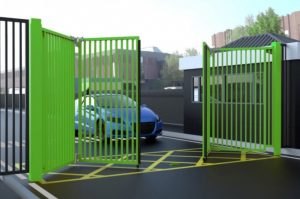
All Procter automatic gates comply with gate safety standards and guidance
Automatic gates are large and heavy, so they require powerful motors to drive the gate leaves. Provided adequate safeguards are in place, automatic gates are safe for users and others in the vicinity. However, as has been demonstrated in several recent tragic accidents, gates that have not been designed, manufactured and installed in accordance with current standards and official guidance have the potential to cause serious injuries or even death.
For many years the key British Standard for automatic gates has been BS EN 12453:2001 (Industrial, commercial and garage doors and gates. Safety in use of power operated doors. Requirements), but investigations by the HSE (Health and Safety Executive) following accidents involving gates led to the HSE issuing new guidance and stating that in some cases gate manufacturers should use additional safeguarding techniques beyond those laid down in the standard in order to reduce the likelihood of hazardous situations arising.
Today, BS EN 12453:2001 is still current, though a revised version is being prepared. The HSE has issued a series of safety notices (FOD WSW 1-2010 in February 2010; FOD 7-2010 in September 2010; and OPSTD 1-2011 in January 2011), as well as some FAQs (frequently asked questions), and advice for gate manufacturers (WG-2013.08) relating to drawing-in risks that can occur if children attempt to ride on powered sliding gates. The Powered Gate Group of the DHF (Door and Hardware Federation) has also published a booklet titled Guide to Gate Safety Legislation and Standards, which was prepared in consultation with the HSE, and has subsequently issued a safety bulletin relating to telescopic sliding gates.
In addition, Procter Automatic Gates has published its own powered gate FAQs to expand on those from the HSE, plus a White Paper on Automatic Sliding Gate Safety and an Automatic Gate Risk Assessment Calculator. More recently the company has launched a free Automatic Gate Specification Checking Service for architects and specifiers.
In October 2014 the Powered Gate Group of the Door and Hardware Federation organised the first Gate Safety Week, which was very actively supported by Procter Automatic Gates, other gate manufacturers, the HSE and a number of trade associations and health and safety organisations.
Procter Automatic Gates takes the issue of gate safety extremely seriously, being one of the founding members of the Powered Gate Group of the DHF. The company designs its own gates (or checks thoroughly any designs received from architects) so is able to ensure that all necessary safeguards are built-in, which is far more cost-effective than retrofitting safety measures after a gate has been installed. Furthermore, the company has its own teams of experienced and knowledgeable installers, and all of its automated gate installations are approved by Procter personnel who have attended the two-day Powered Gate Group training course and been awarded their diploma – these personnel all hold a photo I/D card confirming their Safety Assured Installer accreditation. By ensuring that the gates are all designed, manufactured and installed correctly, Procter Automatic Gates is able to CE mark its gates in accordance with the requirements of the Machinery Directive 2006/42/EC. Furthermore, gates are supplied with operator training, operating manuals and a maintenance contract where requested.
Whether you need powered sliding gates, swing gates, bi-folding gates or telescopic gates, purchasing from Procter Automatic Gates will guarantee that your gate complies fully with the current British Standard, the Essential Health and Safety Requirements of the Machinery Directive, and the official guidance from the HSE and Powered Gate Group of the DHF.
To discuss any aspects of powered gates, contact Procter Contracts by email [email protected]
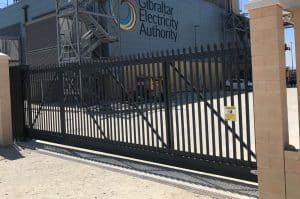
Procter Contracts design, manufacture and installs sliding gates for all types of premises where high-security perimeter protection is required
Jeremy Procter, the Managing Director of Procter Automatic Gates, explains why powered sliding gates can be particularly beneficial for premises requiring high-security perimeter protection, and what to consider when specifying high-security gates.
Perimeter security is the first line of defence for premises, whatever the threat, so a combination of fencing, gates and associated security measures will provide both protection and a deterrent.
Perimeter security is only as good as the ‘weakest link’ and care must be taken to ensure that access points are no less secure than the fencing. As a general rule, the number of access points should be kept to a minimum, though for reason of health and safety it is good practice to have separate access points for vehicles and pedestrians.
Pedestrian gates will normally be of the swing type unless turnstiles are deemed to be more appropriate as part of an access control system. For vehicular access, however, there is a choice between swing gates and sliding gates, with bi-folding gates and telescopic gates being additional alternatives where space constraints are particularly severed. Swing and sliding types both offer similar protection from cutting and climbing, but high-security sliding gates offer significantly better resistance to force. The main reason for this is that part of the gate leaf is retained within a rigid structure. When closed, single-leaf gates are retained at both ends, and double-leaf gates are retained end – which is still an inherently stronger arrangement than swing gates mounted on hinges. Because of the way the gate leaves are retained, they are much more difficult to force open, either by tampering with the fixings and locking mechanisms or by ramming. In addition, the more vulnerable points of a sliding gate are less accessible than those of swing gates.
Another feature of sliding gates is that they are highly suitable for mechanisation using a robust, long-lasting operating mechanism that is protected from the elements and from attack. Furthermore, a multitude of different access control system can be employed, ranging from keypads and intercoms (wireless, if necessary), to in-vehicle radio control, automatic number plate recognition (ANPR) and induction loops. The choice of access control will depend on factors such as the number of vehicles requiring access, the level of security required, and whether there is an existing site-wide security system within which the gate controls must be integrated.
Procter Automatic Gates manufactures the Pro-glide comprehensive range of high-quality yet competitively-priced sliding gates – which includes high-security gates. To complement the gates, the company can also supply and install access control, and a sister division of the same company, Procter Fencing Systems, supplies and installs high-security perimeter fencing and associated security measures. The Series 10, Series 20 and Series 30 Pro-glide cantilevered can tracked sliding gates give specifiers an exceptionally broad choice of options to suit an almost unlimited variety of commercial, industrial and public sector applications. Moreover, custom-made gates are available within the same timescale and cost structure.
Procter Automatic Gates can help architects and specifiers specify high-security gates that will meet al security, performance and safety requirements. If a gate specification has already been prepared, the company offers a free Automatic Gate Specification Checking Service to help ensure the gates meet all current safety standards and guidance from the HSE (Health and Safety Executive) and the Powered Gates Group of the DHF (Door and Hardware Federation). In addition, Procter Automatic Gates has prepared a number of free Guides, Calculators and White Paper to support architects and specifiers. These are available from the Downloads section of the website. Alternatively, email [email protected] to discuss any aspects of high-security gates or particular projects.
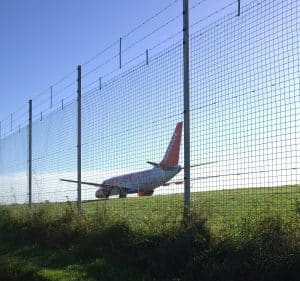
Selecting the optimum type of fencing requires a careful balance to be made between security, aesthetics and cost
Airport security enjoys a high profile today, with sophisticated systems being installed for scanning passengers and baggage. But just as important are front-line defences such as perimeter fencing to keep intruders out. Bristol International Airport has recently completed a project to upgrade its perimeter fencing with approximately 2.5 miles (3.8km) of high-security fencing supplied and installed by Procter Contracts.
Procter Contracts was initially invited to tender because of the high quality of a smaller project already completed for the airport. This, combined with a competitively priced tender, made Procter the natural choice for the airport.
Working in and around an airport brings with it an unusual set of challenges. For example, because of the security issues, the fencing integrity has to be maintained at all times, and there are limits on the movement of personnel and machinery.
To ensure that the fencing integrity was maintained one hundred per cent at all times during the project, a 3m-high deer fence was first installed inside the existing perimeter fencing in the areas being worked on. The existing chain link fence was then removed in sections to allow a trench to be excavated for the new fence to be positioned 0.5m from the line of the old fence. Posts were set in concrete at 3m centres, the mesh fixed in place and the trench back-filled to complete the installation.
The new fence is 2.4m high and extends below ground level. Two types of fencing are installed in different areas of the airport. The first has three rows of barbed wire, while the second has two rows of barbed wire in front plus two rows of razor wire in 900mm diameter coils above. Galvanised weld mesh panels are secured to the box-section steel posts using tamper-resistant stainless steel barrel winders concealed within the posts.
In addition to the perimeter fencing, Procter has installed further fencing around the control tower, four 8m-wide gates and five 4m-wide gates, all of which are to BS 1722-10 standard.
Carl Lapworth, Head of Engineering at Bristol International Airport, is pleased with the end result: “I am very impressed with both the quality of the fencing and workmanship. Procter Fencing Systems clearly had a thorough understanding of our requirements and expectations and worked extremely hard to meet them. The site foreman did an excellent job in leading his team to ensure that the work was carried out efficiently and to a consistently high standard. In fact, we have been so pleased with the work that we have since invited Procter Fencing Systems to quote for further fencing projects at the airport.”
For every project, Procter appoints a Contracts Manager to oversee all aspects of the work and act as a single point of contact for the customer. This helps to simplify matters for the customer and ensures that there is always somebody available who can respond to queries about materials, installation and the contract – even for the largest of projects.
As well as security fencing and gates, Procter Contracts also designs, manufactures and installs a wide range of fencing types and styles for industrial, commercial, agricultural and domestic applications. Fencing is available in a variety of formats, such as chain link, welded mesh panels, vertical bar railings, palisade or to bespoke designs. In addition, the company also offers matching gates and a choice of access control systems. With over 100 years of experience in fencing and gates, Procter Contracts is able to apply traditional skills and modern technology to the design and manufacture of fencing systems that meet the needs of architects, specifiers and contractors. Because all processes are controlled in-house, Procter Fencing Systems can design, manufacture and install standard or customised systems extremely rapidly.
For more information about security and other fencing, please email Procter Contracts or telephone us.
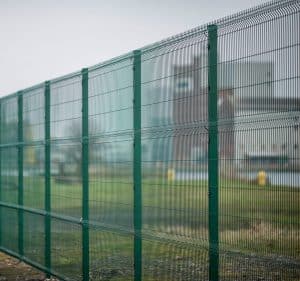
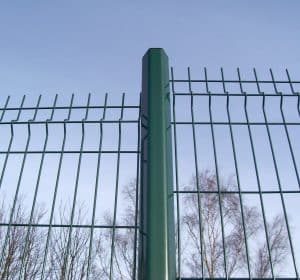
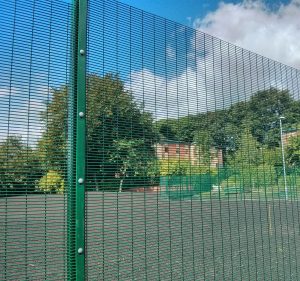 Procter Contracts is launching the Pro-sure 358 high-security mesh panel fencing system. Consisting of mesh panels, profiled steel posts and a special panel fixing design, the system is not only secure but also aesthetically pleasing thanks to all fixings being on the inside of the fencing. A galvanised finish with a tough green polyester coating on the panels, posts and clamps ensures that the fencing continues to look good for many years, without any need for maintenance.
Compared with other high-security mesh panel fencing, the Pro-sure 358 system is more secure and has a better appearance, yet it is very competitively priced. It exceeds the requirements of BS 1722-14 Fences. Specification for open mesh steel panel fences and can be erected by Procter’s teams of installers very quickly and easily.
Panel height is 2.4m and the maximum width is 2.515m, with 4mm wire welded to create a mesh 76.2 x 12.7mm. The profiled posts measure 66 x 80mm. All components are available from stock. If required, Procter Fencing Systems can also manufacture, supply and install matching pedestrian or vehicle access gates, and additional security can be provided in the form of fence post extensions and 450mm flat wrap barb tape.
Typical applications for the Pro-sure 358 high-security mesh panel fencing system include industrial/commercial areas, schools, hospitals, psychiatric units, young offenders’ centres, prisons and other areas where a simple boundary fence would provide inadequate security.
A PDF datasheet is available from the Free Downloads section of the website or requests a copy by emailing [email protected] or telephoning 0800 2944177.
Procter Contracts is able to install most Secured by Design perimeter security products as this not only demonstrates the high quality of Procter’s service but also makes it easier for developers and contractors to ensure that SBD-accredited products are properly installed in order to achieve the intended standards of crime-prevention.
|
|

The scope of Procter’s installation service covers the installation of Secured by Design fencing products including standard and high-security grades of palisade fencing and Pro-Sure 358 welded Mesh panel fencing, Pro-twin mesh panel, steel railings, and timber acoustic fencing. This gives architects and specifiers a broad choice of Secured by Design fencing systems for applications ranging from homes, offices and schools/colleges to industrial, commercial and utilities premises.
In addition, Procter Fencing Systems is accredited to install Secured by Design accredited perimeter security measures such as fence-mounted intrusion detection systems and telescopic security posts. All of these products and the fencing systems have been tested and approved by UKAS-accredited test houses as being compliant with the standards specified by the SBD scheme. Secured by Design (SBD) is an official police security initiative that aims to reduce crime through effective environmental design. The scheme also calls for the installation of fences and other security products that meet Police-approved standards. More information is available at www.securedbydesign.com.
Established in 1989 by the Association of Chief Police Officers (ACPO), SBD is now widely recognised within the building industry and is increasingly being listed in tenders as a mandatory requirement. Specifying SBD-accredited products helps developers to demonstrate that they are taking appropriate steps to reduce crime and meet new planning requirements. Consumers and specifiers are also recognising that SBD is a simple way to identify products that are effective in preventing crime, as the SBD logo is the only symbol guaranteeing national Police approval of the installation of products providing a realistic level of resistance to criminal attack.
More information about Procter Fencing Systems is available, email [email protected]
>> Next: High security prison installation
>> Procter Contracts News