
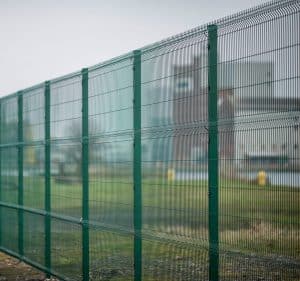
 Procter Contracts has published a free Guide to Sports Ground Fencing to help specifiers determine the optimum fencing so as to achieve the best value while fulfilling the necessary performance requirements.
Sportsground fencing performs many roles beyond preventing balls from straying, such as boundary demarcation, keeping intruders and animals away, and reducing risks to road traffic. Specified correctly, sports ground fencing enables participants to enjoy sports without presenting a nuisance or hazard to neighbours; high-quality fencing also helps to project the right image to club members, opposing teams and the local community. However, there are many different types and styles of fencing available today, with similarly wide-ranging costs for purchase and installation. Specifiers can, therefore, benefit from advice and guidance on what types of fencing suit different requirements – which may vary considerably from one part of a facility to another.
The new Guide to Sports Ground Fencing explains the differences between various types of fencing and the options available, thereby helping to steer the reader towards developing a specification that will fulfil the performance requirements while taking into account costs, aesthetics and other considerations.
Included within the guide are sections covering topics such as the aims and objectives when specifying fencing, how to choose the right type of fencing, specifying gates, the importance of correct installation, maintenance considerations (and, consequently, minimising the total cost of ownership), fencing standards and specifications, useful resources, and sources of further information.
Copies of the Guide to Sports Ground Fencing can be downloaded free of charge from the Specifiers Guides section of the website. Alternatively, contact Procter Fencing Systems to discuss any sports ground fencing requirements by telephone on 0800 2944177 or email [email protected]
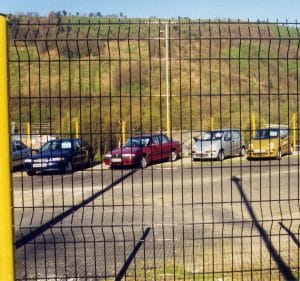 Primary school fencing and gates serve two principal purposes, namely preventing the unauthorised departure of children and keeping out people seen as a threat to young children. For these reasons, primary schools tend to implement even tighter security than other types of school, particularly in relation to personnel access. Aside from the two extremes, fencing and gates also act as a deterrent against trespass, vandalism, theft and arson, as well as giving children, parents, teachers and governors a sense of security. With Ofsted’s latest guidance requiring inspectors to consider the school’s security, high-quality fencing has become all but essential.
Mesh panel fencing (or ‘weldmesh’) is a popular, cost-effective, durable and secure choice for primary and secondary schools alike. For primary schools, however, railings are also frequently specified, either bow-top railings or blunt top railings. RoSPA has published guidance for fencing play areas, but the main standard for railings – or ‘vertical bar fencing’ – is BS 1722-9, ‘Fences – Part 9: Specification for mild steel (low carbon steel) fences with round or square verticals and flat horizontals’. This standard details the dimensions and also the protective galvanised finish. An additional polyester powder coating can be applied to improve the aesthetics, with bright colours being popular for primary schools. Indeed, aesthetics are very important for primary schools, as the provision of security should not detract from the attractive learning environment.
However, in areas such as those where ball games are played, mesh panel fencing is usually more appropriate. Clearly, each project must be considered on its own merits, with a formal risk assessment undertaken.
Control of personnel and vehicle access and egress is especially important for primary schools, so features such as keypad-controlled electric personnel gates and powered sliding gates for vehicles can be used to ensure the passage of authorised traffic only.
For the selected fencing to fulfil the requirements, it is important that installation is carried out by a competent firm with its own teams of trained installers and accreditations such as ISO 9001, Secured by Design, CHAS (Contractors Health & Safety Scheme), Construction Line and Safe Contractor. By choosing the right fencing and installer, primary schools can strike the optimum balance between security and aesthetics, at a reasonable price, and with minimal requirements for future maintenance.
A free guide, Fencing for Schools, is available as a free download from the Procter Fencing Systems website. Alternatively, contact the company to discuss fencing and gates for primary schools by telephone us or email [email protected]
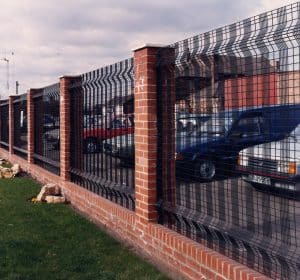 Based in Bedwas, Caerphilly, Procter Contracts is one of the UK’s leading specialists in the design, manufacture and installation of high-quality fencing, gates, barriers and railings. The South Wales company has a strong reputation nationwide for its comprehensive service, which covers everything from simple fencing for boundary demarcation through to high-security fencing with associated electronic deterrent and surveillance systems.
The full range of fencing includes railings, mesh panel fencing, sports ground fencing, timber fencing, chain link and weldmesh, palisade, barriers, construction site hoarding, playground fencing and high-security fencing. Swing gates and automatic sliding gates can be supplied to complement the fencing, as an additional security features such as access control, toppings, electric pulse systems and electronic surveillance systems.
To ensure complete customer satisfaction, Procter Contracts offers a comprehensive service that includes technical consultations and site surveys, design services, manufacture and installation – for which the company uses its own skilled and experienced teams.
Another way in which Procter Contracts has ‘gone the extra mile’ to support its customers is by producing a series of market-leading guides and software-based resources; these include a Specifier’s Guide to Perimeter Security Fencing, a Guide to fencing for School, a Guide to High-security Perimeter Protection, a Fencing Selector, an Example Risk Assessment for Sliding Gates, and White Paper relating to gate specifications and safety. All are downloadable for free from the fencing website and the sliding gates website.
Fencing and gates are designed, manufactured and installed in accordance with a quality management system that is accredited to BS EN ISO 9001:2008, and powered gates are CE marked to the Machinery Directive’s requirements. Procter Fencing Systems also has accreditation to the following schemes: Contractors Health & Safety Scheme (CHAS); Construction Line; UVDB Achilles; Safe Contractor; and Secured by Design.
Notable sites with Procter fencing and gates include Kensington Palace, HMRC Tax Office in Cardiff, DVLA in Swansea, Welsh Assembly, St.David’s II, Leckwith Stadium and the BBC’s new site in Cardiff, while hundreds of other projects have been successfully completed for utility companies, DIY stores, schools, and industrial and commercial premises.
For general advice or to discuss specific requirements for fencing and gates in South Wales or, indeed, anywhere in the UK, telephone 0800 2944177 or email [email protected]
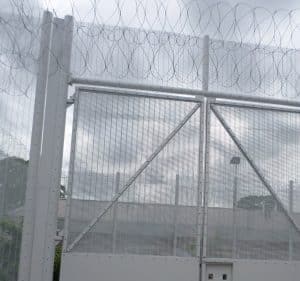
Prison Fencing Featured Welded Mesh
Procter Contracts is now on the official Ministry of Justice Compliant Contractor List for Fencing. This means that the company is approved to manufacture and install MoJ-designed prison fencing for applications throughout the UK, including Northern Ireland.
In order to be listed, Procter Fencing System was subjected to a financial audit, then had to erect a sample of the prison fencing for inspection and testing by personnel from the MoJ. Prison fencing features high-quality welded wire mesh panels that are overlapped and attached to steel posts using full-height clamping bars and security fasteners. The fence panels and posts are protected against corrosion by galvanising, with the option of a tough polyester powder coated finish to enhance the aesthetics.
Although the fencing was designed by the MoJ for prison applications and exceeds the requirements of all British and European Standards for fencing, it is a high-security fencing product that is also suitable for other sensitive applications such as data centres and psychiatric hospitals. If required, Procter Fencing Systems can enhance the MoJ-designed prison fencing – or other types of high-security fencing – by means of additional measures such as an electric fencing system or electronic perimeter intruder detection system. Swing gates and sliding gates for pedestrian or vehicular access can also be supplied and installed to complement the fencing.
Procter Fencing Systems was added to the MoJ Compliant Contractors List in late 2011, but the company has been manufacturing and installing all types of fencing and gates – including for high-security projects – for over 100 years. As well as this latest recognition of the company’s high standards, Procter Fencing Systems also has several accreditation: CHAS (Contractors Health & Safety Scheme), Construction Line database, ISO 9001:2008, Secured by Design, and the company is registered and approved with UVDB Achilles – which identifies, evaluates and monitors suppliers for major organisations such as utilities, the construction industry and the public sector.
Procter Fencing Systems has published a Guide to High-Security Perimeter Protection, which is available free of charge on request or as a download from the Specifiers Guides section of the website.
Contact Procter Contracts to discuss any requirements for prison fencing or any other high-security fencing. Telephone or email [email protected].
Download Perimeter Fencing White Paper
|
Planning a fencing project is a new FREE White Paper published by Procter Fencing Systems, packed with hints and tips for specifiers. The guide will be of assistance to people new to preparing for fencing projects and those who are experienced but who want to minimise costs.
There is more to specifying fencing than many people realise, and making mistakes can result in fences that do not meet the requirements fully or cost more than they should. The secret to success lies in careful planning.
The White Paper discusses the three main reasons for erecting fencing: security, aesthetics and boundary demarcation. It then explains how to assess the level of security required so that the optimum fencing products can be selected, and describes the options for projects where aesthetics are an important consideration or where the need is simply for boundary demarcation.
A perimeter fence will only ever be as secure as the access points, so the White Paper provides guidance on specifying powered and manually operated gates and access controls when planning a fencing project, and tells readers what to look for in terms of potential security breaches. Compliance with local planning regulations is also discussed.
The final point to consider when planning a fencing project is who will install the fencing, gates and additional security features. Some installers simply hire unskilled labour as necessary, whereas Procter Fencing Systems, which has CHAS accreditation, employs full-time, skilled and experienced installation teams. Moreover, all Procter’s personnel have received the required CISS health and safety training, and contracts are carried out in accordance with BS EN ISO 9001:2008 procedures.
Planning a fencing project contains a wealth of useful advice. This White Paper is available free of charge via the Specifiers Guide section of the website or email [email protected]
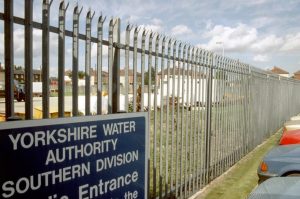 The Scrap Metal Dealers Act 2013 came into force on 1st October 2013 with the aim of reducing metal thefts. Although this has been broadly welcomed, Jeremy Procter, Managing Director of Procter Fencing Systems, cautions that this new legislation is no reason to be complacent about perimeter security.
The Scrap Metal Dealers Act 2013 came into force on 1st October 2013 with the aim of reducing metal thefts. Under this new legislation, all scrap metal dealers must apply to their local council for a licence, and dealers must verify the name and address of sellers at the point of sale. In addition, local authorities and the police have been granted new powers to inspect premises where they suspect illegal activity is taking place. Scrap metal dealers – and that includes door-to-door ‘mobile collectors’ – can be fined up to £5,000 if they are found to be dealing in cash.
According to the Home Office, metal theft has been costing the UK economy around £200 million per year, and there has been a great deal of publicity surrounding the theft of railway signalling cables, telecommunications cables, and lead from churches. But countless other businesses and individuals have also suffered at the hands of metal thieves. It is therefore hoped that the new Scrap Metal Dealers Act will go a long way towards reducing metal theft, but can it eliminate it?
Unfortunately, the answer to that question is no. The new legislation cannot reduce the global demand for metals, which continues to be very strong, so the high price of scrap metal remains as an incentive for unscrupulous individuals and gangs who steal metals, as well as rogue dealers who stand to profit from selling it on. Although there are now strong deterrents in place, deterrents are rarely sufficient to eradicate crime.
Premises where metals are stored, in whatever form, still need to have good perimeter security to deter and prevent theft. But there is another important point to consider as well. If The Scrap Metal Dealers Act is sufficient to deter most metal theft, the individuals and gangs previously involved in this activity are now likely to be looking to steal other items with a resale value: a business that was previously overlooked by thieves may now find themselves being targeted.
Perimeter security fencing is the first line of defence around any premises and is therefore vitally important. Appropriate high-security fencing can act as an effective deterrent and, moreover, correctly specified and installed fencing also prevents some fencing additionally delays determined intruders when they are attempting to enter or leave the premises, which provides an opportunity for them to be apprehended.
In many cases today the fencing is only one element of the overall perimeter security, with additional security features typically including electric pulse fencing, rotating toppings and electronic surveillance. Remember, too, that care must be taken to ensure that pedestrian and vehicular access points are not vulnerable, so gates and associated access controls must be properly specified and installed as well.
Specifying perimeter security has now become a complex issue and there are pitfalls to be avoided. Not only are there legal requirements to be met, but each application has its own needs – so the solution to the problem is different in every case and may not even ben the same at all locations around a site. Specifying the wrong type of fencing and complementary security measures could result in inadequate protection, whereas over-specifying could prove to be unnecessarily costly.
It is clear that The Scrap Metal Dealer Act will not end all metal theft and could actually increase other types of acquisitive crime. To help specify the correct perimeter security fencing, gates and other measures, Procter Contracts has published ‘All-Round Protection – A Specifier’s Guide to Perimeter Security Protection ‘. Download a copy of this free guide now, view the various fencing and gates products on the website, or telephone 0800 2944177 or email Procter Fencing Experts to inquire about your particular projects.

Procter Automatic Gates is launching a free specification checking service for architects and specifiers
Procter Contracts, a UK leader in the design, manufacture and installation of automatic swing, sliding, telescopic and bi-folding gates, is launching a free specification checking service for architects and specifiers. This service will help to ensure that new powered gates comply with all current safety standards and guidance from the Health & Safety Executive (HSE) and the Powered Gates Group of the Door & Hardware Federation (DHF). Moreover, it will help to avoid the need for costly alterations and upgrades during or after the installation, and architects, specifiers and end users can be confident that the gates will, in fact, be safe.
Powered gates offer many advantages, particularly where some degree of manual or automated access control is required, but the gates are usually equipped with motors that are powerful enough to cause serious injury in the event of a person to become trapped or entangled in the moving gate or its mechanism. In the past few years, there have been three fatalities, which underlines the need to get the design and specification right on new powered gates. Gate safety has always been a priority for Procter Automatic Gates (and Procter Sliding Gates prior to the rebranding), and for several years the company has endeavoured to educate the market by publishing articles about gate safety via its own website and email newsletter, and also in the trade press. The company is a founding member of the Door and Hardware Federation’s Powered Gate Group that was established in response to requests from the Health & Safety Executive. Since its formation, the Powered Gate Group has worked with the HSE to write a Guide to Gate Safety Legislation and Standards and has also developed a comprehensive training programme that will become mandatory for all members of the group. Procter Automatic Gates is one of the first companies to attain the status of a Safety Assured installer, with a total of 5 members of staff completing the training programme and being awarded their Safety Diploma that qualifies them to inspect and assess the safety of powered gates.
Procter Automatic Gates is now offering a specification checking service to coincide with Gate Safety Week (13-19 October), which has been organised by the Powered Gate Group to improve awareness of the issues relating to the installation and maintenance of powered gates. Any architect or specifier planning to use a powered gate on a project in the UK can submit their designs and specifications, together with information about gate usage, whereupon Procter’s experts will assess whether the gate would meet the essential health and safety requirements of the Machinery Directive 2006/42/EC and could be CE marked accordingly and whether the gate would satisfy the requirements of the Powered Gate Group Guide to Gate Safety Legislation and Standards. Depending on the conditions of use (for example, whether members of the public are present or just trained users) and the types of control (for example, fully automated or hold-to-run switches), there are guideline for the types of safety measures that should be specified, such as key switches, pressure-sensitive edges, presence detection devices and force limitation. Other aspects of the specification that Procter’s experts will check include the adequacy of the fencing to protect the run-back area, trip hazards, and the widths of gaps between swing gates and supporting pillars.
Installing over 100 powered gates every year, Procter Automatic Gates is very familiar with the standards and guidelines, so is in an excellent position to check specifications. Doing so at the design and specification stage is very prudent, as installers are legally obliged to check the gate and, assuming it is fully compliant, issue a Declaration of Conformity and CE mark the gate to indicate that it meets the requirements of the Machinery Directive 2006/42/EC. If any shortcomings are identified, it may be necessary to make safety-related modifications or enhancements that could be costly and delay completion of the project.
To use the free specification checking service or to discuss any aspects of automatic gates, telephone us or email [email protected]
How do I know I can trust Procter Fencing Systems?
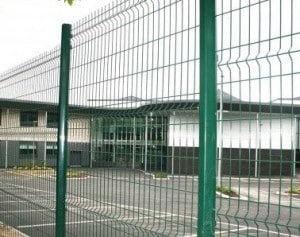 We have been in the business for over 100 years and this gives us almost unrivalled experience and expertise.Seriously though, it’s a fair question – Here are 10 good reasons why you can trust us here at Procter Fencing Systems for all your fencing needs, no matter the size… BIG or small!
- We have a culture within Procter Fencing Systems which, though we say so ourselves, is exceptionally customer focused and in every sense of the term. We never walk away.
- As an independent company and one which isn’t locked into certain types of fencing, we always propose the optimum fencing and gates solution for the customer and not just one which suits us.
- Our fencing installers are highly trained to fully support our products and services, with this ethos backed by audited quality control procedures to BS EN ISO9001:2008.
- We have a total commitment to health and safety with CHAS, Achilles and UVDB Accreditation.
- Previous and high profile projects we’ve completed include the conversion of Highbury Football Stadium, Manchester United FC Training ground, Cardiff FC Leckwith Stadium, the famous gates at Kensington Palace and the entire perimeter fence at Bristol Airport – clearly these projects provide a measure of our experience, expertise and professionalism.
- We’re not ‘just’ fencing contractors – we advise on fencing and gates, manufacture fencing and gates, identify the solution, then expertly install it all.
- We’d never say that problems don’t occur – the nature of any construction-related industry will ensure they occasionally do – but what we can say is that our unique culture and level of experience will mean we’ll quickly rectify them.
- All our work carries a full guarantee with some products carrying extended warranties for up to 10 years.
- We respond to any question, enquiry or problem etc. quickly and efficiently – it’s all part of how we work and the outstanding service we aim to give to our customers.
For more information on all Procter Fencing Systems services E-mail : [email protected] or call us.
>> Next: Procter Contracts available through RIBA NBS System
>> See All Procter Fencing Systems News
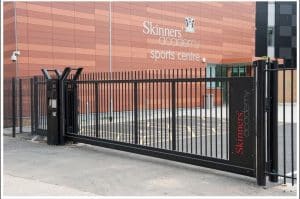 Procter Automatic Gates is one of the founding members of the Powered Gate Group of DHF, which was established with support from the Health & Safety Executive (HSE) in response to serious concerns about the safety of automatic gates following the tragic deaths of children on unsafe powered gates.
We have been proactive in promoting the highest standards of safety for automatic gates, whether these are sliding gates, swing gates, bi-folding gates, or telescopic gates.
Our high-level involvement includes designing and delivering training on powered gate safety, and promoting this to specifiers, contractors, facilities managers, industrial, commercial and private users of automatic gates.
As part of a working group of experts following HSE guidance, we have participated in developing the most comprehensive training course for the design and installation of fully compliant and safe automatic gates.
The Powered Gate Group training is delivered in modules over two days, and ends with a very tough exam requiring a high score to pass each module before participants are awarded a Powered Gate Group Safety Diploma.
To read more and view our certificates please CLICK HERE
The HSE has published a set of helpful powered gate safety FAQs
The HSE has published a set of powered gate safety FAQs (frequently asked questions) to help people understand the issues relating to a powered gate (automatic gates) and ensure that such gates are safe to use. There are eight questions aimed primarily at premises owners, gate installers and maintenance contractors:
- What are the risks with powered (automatic) doors and gates, and how can they be controlled?
- What if I think a gate is unsafe?
- I am a domestic householder, do I have to do anything?
- I own commercial/industrial premises, what do I have to do?
- I install doors and gates, what must I do?
- What are the main safety requirements for these machines?
- What does the law say?
- Where can I get more information?
Certainly, the answers to these gate safety FAQs are useful but, here at Procter Automatic Gates, there are several other questions that we are often asked. These questions – and our answers – are provided below to complement those on the HSE website.
1. How do I do a risk assessment on a powered gate?
A powered gate is a ‘machine’ as defined in the European Machinery Directive 2006/42/EC so should be risk-assessed in accordance with the relevant standard, namely BS EN ISO 12100:2010, ‘Safety of machinery. General principles for design. Risk assessment and risk reduction’. Not all aspects of this standard are relevant to powered gates, and the way in which the gate is used has a significant bearing on the risk assessment. For example, if the gate will only be operated by a trained person using a hold-to-run switch then the need for safeguards is much reduced compared with situations where the gate could be operated by any member of the public. Some guidance is provided in the DHF Guide to Gate Safety Legislation and Standards but Procter Automatic Gates has developed a Powered Gate Risk Assessment Calculator specifically for use with powered gates; this is available as a free download. For people who are not familiar with performing a detailed risk assessment on machinery, we can also provide support and assistance.
2. Do powered gates need to be CE marked?
Because powered gates are machines they need to be CE marked in accordance with the Machinery Directive (not the Construction Products Directive or Construction Products Regulations). However, it should be noted that new gates should be CE marked when they are first installed (in virtually every case they will not be complete until they have been installed, so cannot be CE marked until that point). In addition, any gate that was installed since the current Machinery Directive 2006/42/EC came into force at the end of 2009 should have been CE marked from new. If an existing powered gate is being upgraded with, for example, a new type of actuator or new safety-related control features, then it will possibly need to be CE marked as if it were a new machine (each project has to be considered on its own merits). If an existing manually operated gate is being powered or automated for the first time, then it will need to be CE marked as if it were new (see below).
3. What do I need to do if I automate an existing manually-operated gate?
As mentioned above, if a manually operated gate is being upgraded by the addition of a powered actuator or automation system then it will need to be CE marked (this is a legal requirement). The person doing the work is responsible for CE marking, though advice and guidance are available from various sources; for example, Procter Machine Guarding, which is a sister division of Procter Automatic Gates, has published a Guide to the New Machinery Directive. Machinery safety consultants are also able to provide support, and the supplier of the power/automation equipment may offer advice. As part of the CE marking process, it is essential to carry out a risk assessment (see above) and it will almost certainly be necessary to install safety measures as well as the actuator. Typical safety measures include light beams, pressure-sensitive safe edges on the gates and adjacent fixed structures, and guarding around the run-back area for the moving gate leaf.
Perhaps the most important point to note about powered gate safety is that unsafe gates have previously caused deaths and serious injuries, but taking the right precautions should ensure gates are safe. In each case a thorough and formalised risk assessment is essential, and every gate and application is different so needs to be given due consideration. Any work undertaken on a powered gate should only be undertaken by people who are competent to do so, whether that is installation, maintenance or upgrading. For example, Procter Automatic Gates, which designs and manufactures standard and bespoke gates, was one of the first installers to achieve Safety Assured Accreditation from the Powered Gate Group of the Door & Hardware Federation (DHF).
Follow the links to download copies of the DHF Guide to Gate Safety Legislation and Standards, the Procter Contracts White Paper on Automatic Sliding Gate Safety, and the Powered Gate Risk Assessment Calculator. Alternatively, telephone us or email [email protected] to request copies or to inquire about powered gates. Finally, this link will take you to the web page for the HSE powered gate safety FAQs.